The 5 C's Framework
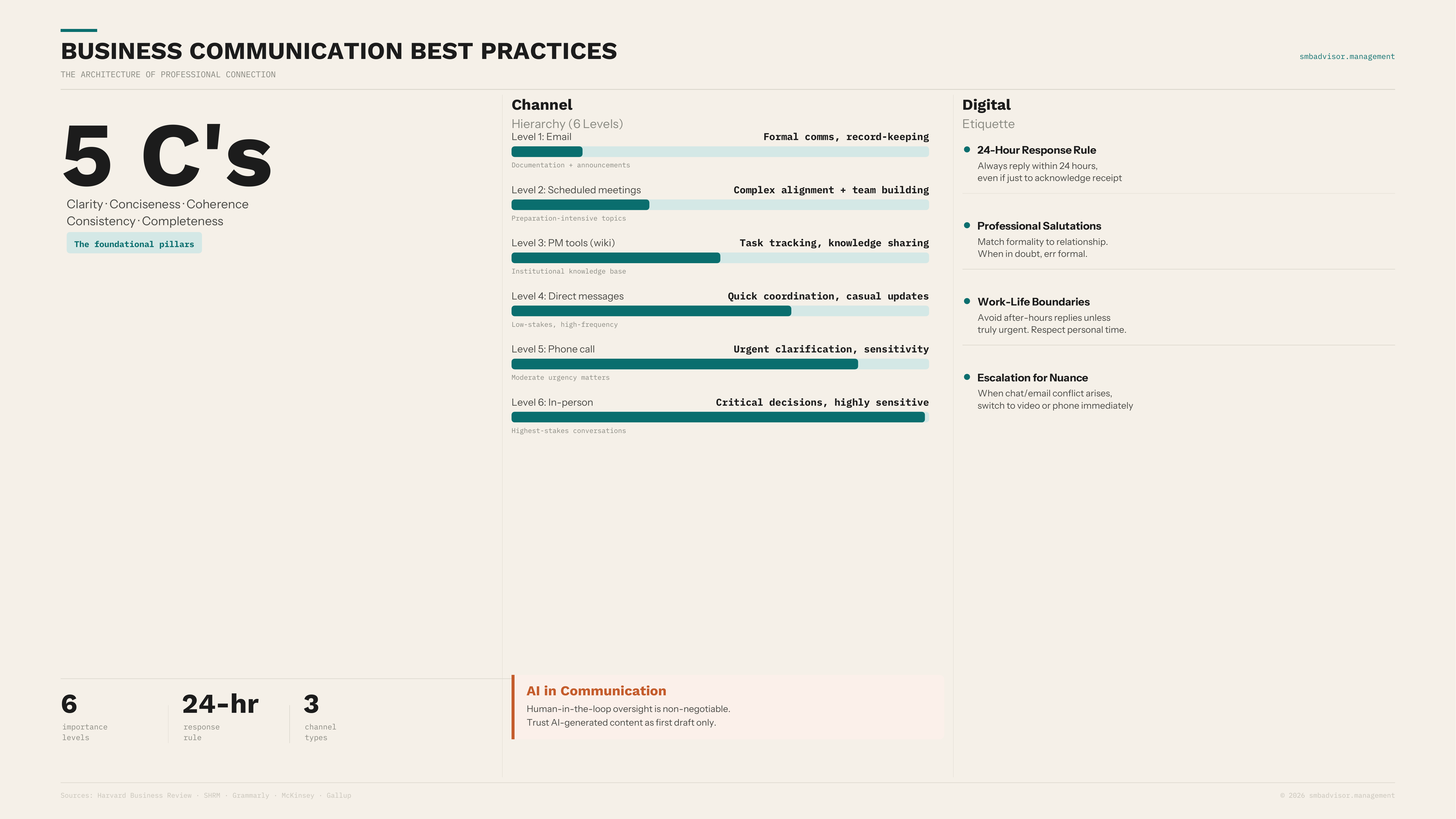
High-performing organizations treat communication as infrastructure rather than behavior : establishing written standards for which decisions require which format, which channels serve which purposes, and which meetings have standing decision-making authority. Every professional communication should meet five criteria: Clarity ensures the message is unambiguous. Conciseness removes unnecessary words. Coherence maintains logical flow. Consistency aligns tone and message across channels. Completeness ensures the recipient has everything needed to act. These five pillars apply equally to emails, presentations, reports, and verbal communications.
Channel Hierarchy
Six levels of communication channels serve different purposes. Email handles formal communications and record-keeping. Scheduled meetings address complex alignment and team building. Project management tools serve task tracking and knowledge sharing. Direct messages handle quick coordination. Phone calls resolve urgent clarifications. In-person conversations are reserved for critical decisions and highly sensitive topics. Matching channel to purpose prevents both over-escalation and under-communication.
Digital Etiquette
The 24-hour response rule requires acknowledging every message within one business day, even if the full response takes longer. Professional salutations should match the formality of the relationship, defaulting to formal when uncertain. Work-life boundaries demand avoiding after-hours replies unless truly urgent. When chat or email conflict escalates, immediately switch to video or phone to prevent misinterpretation.
Sources: Harvard Business Review, SHRM, Grammarly, McKinsey, Gallup