The 80/20 Rule of Preparation
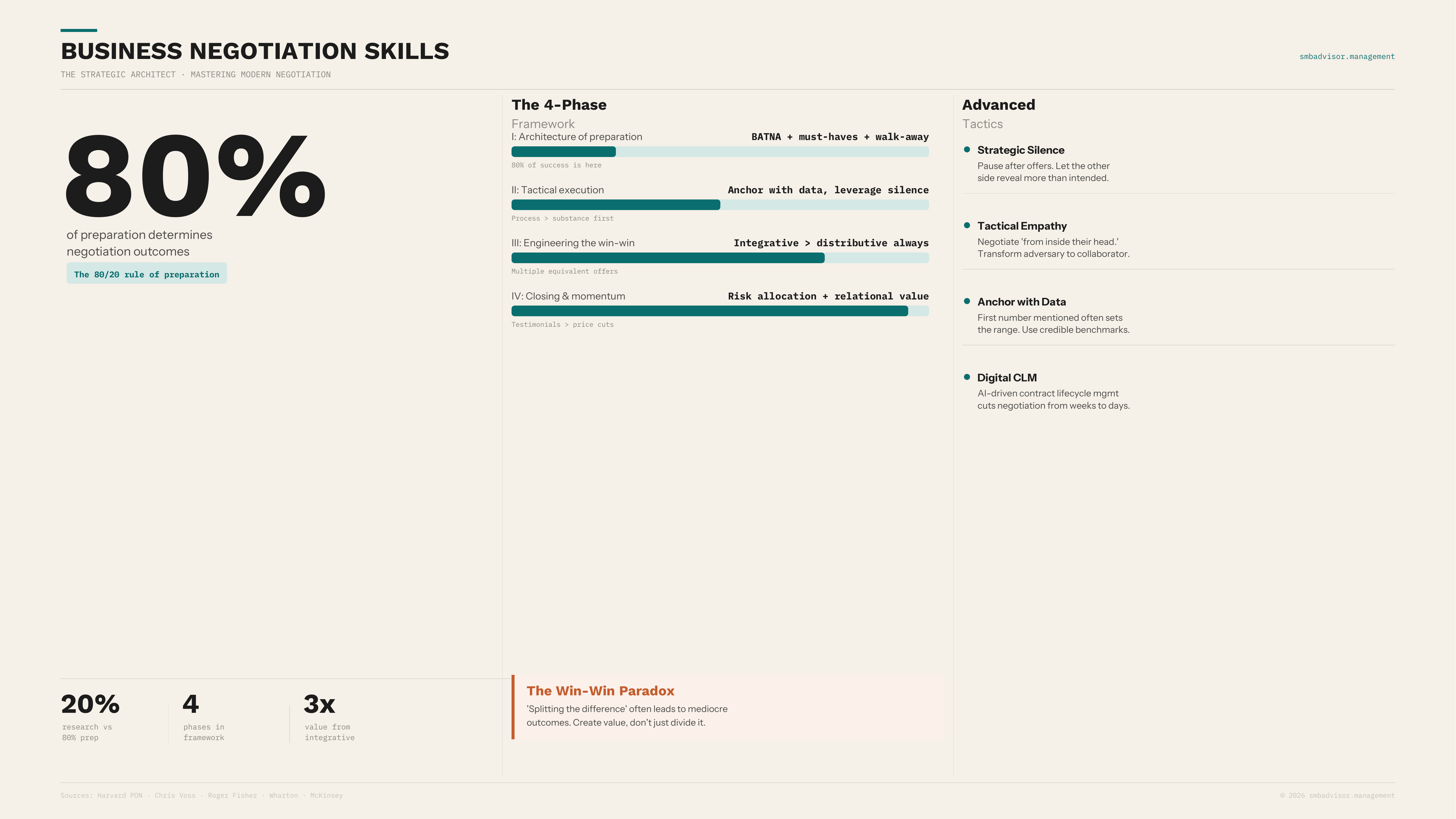
Research from the Harvard Program on Negotiation consistently shows that preparation quality : specifically knowing your BATNA (best alternative to a negotiated agreement) and understanding the counterparty's interests before the session. This the single strongest predictor of negotiation outcomes. Eighty percent of preparation determines negotiation outcomes. Top negotiators allocate 80% of their effort to research, goal-setting, and BATNA development, leaving only 20% for the actual discussion. Defining your Best Alternative to a Negotiated Agreement is the single greatest source of negotiating power: knowing your backup plan allows you to walk away with confidence rather than desperation.
The 4-Phase Framework
Phase I covers the architecture of preparation: BATNA development, must-haves identification, and walk-away point definition. Phase II focuses on tactical execution at the table, anchoring with credible data and leveraging strategic silence. Phase III engineers the win-win through integrative bargaining and multiple equivalent offers. Phase IV sustains momentum through relational incentives and AI-driven contract lifecycle management.
Advanced Tactics
Strategic silence after presenting an offer forces the other party to process and often reveals more information than intended. Tactical empathy means negotiating from inside the other person's perspective, transforming an adversarial dynamic into a collaborative one. Always anchor with credible market benchmarks, as the first number mentioned typically sets the range for the entire negotiation.
Sources: Harvard PON, Chris Voss, Roger Fisher, Wharton, McKinsey