The Psycholinguistic Foundation
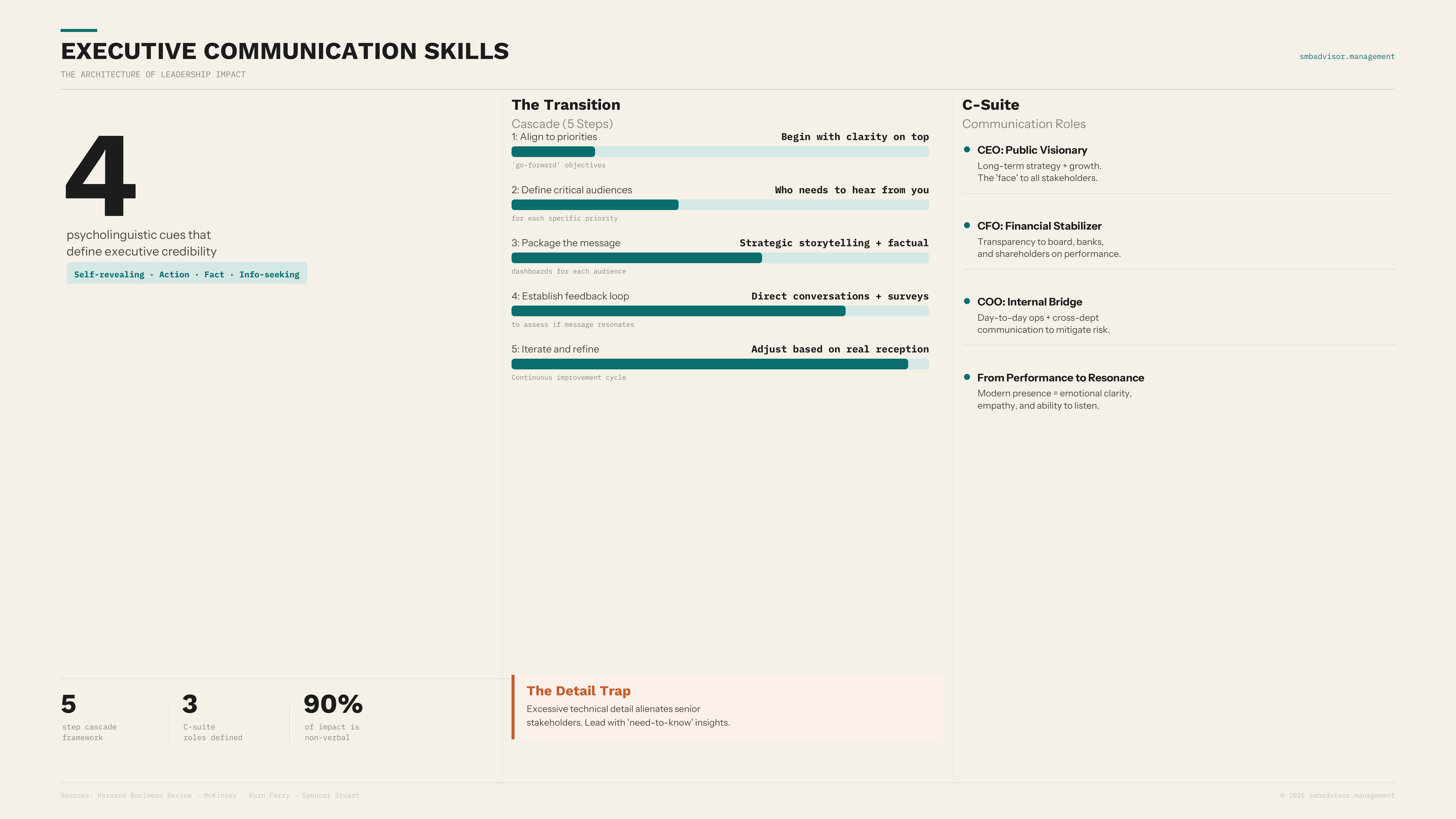
Boards and investors evaluate executive communication on four dimensions: clarity of strategic narrative, consistency between stated priorities and resource allocation, quality of upward communication about risks, and the ability to communicate difficult news directly without distortion. Four psycholinguistic cues define executive credibility: self-revealing statements that build connection, action-seeking language that drives outcomes, fact-oriented framing that establishes authority, and information-seeking questions that demonstrate intellectual humility. Simple, clear linguistic features facilitate easier cognitive processing, leading to favorable first impressions and sustained audience engagement.
The Transition Cascade
Every executive communication strategy begins with aligning to the top three priorities. Step two identifies which audiences need to hear from the executive directly for each priority. Step three packages the message through strategic storytelling combined with factual dashboards tailored per audience. Step four establishes feedback loops through direct conversations and surveys. Step five iterates based on real reception data.
From Performance to Resonance
Modern executive presence has moved beyond the "polished script" to emotional clarity, empathy, and the ability to listen actively. Leaders who create psychological safety by empowering others to speak up consistently foster higher-performing teams and more innovative environments. Gravitas comes from regulation rather than reactivity, building steadiness and trust through consistent behavior.
Sources: Harvard Business Review, McKinsey, Korn Ferry, Spencer Stuart