Bridging the Generational Divide
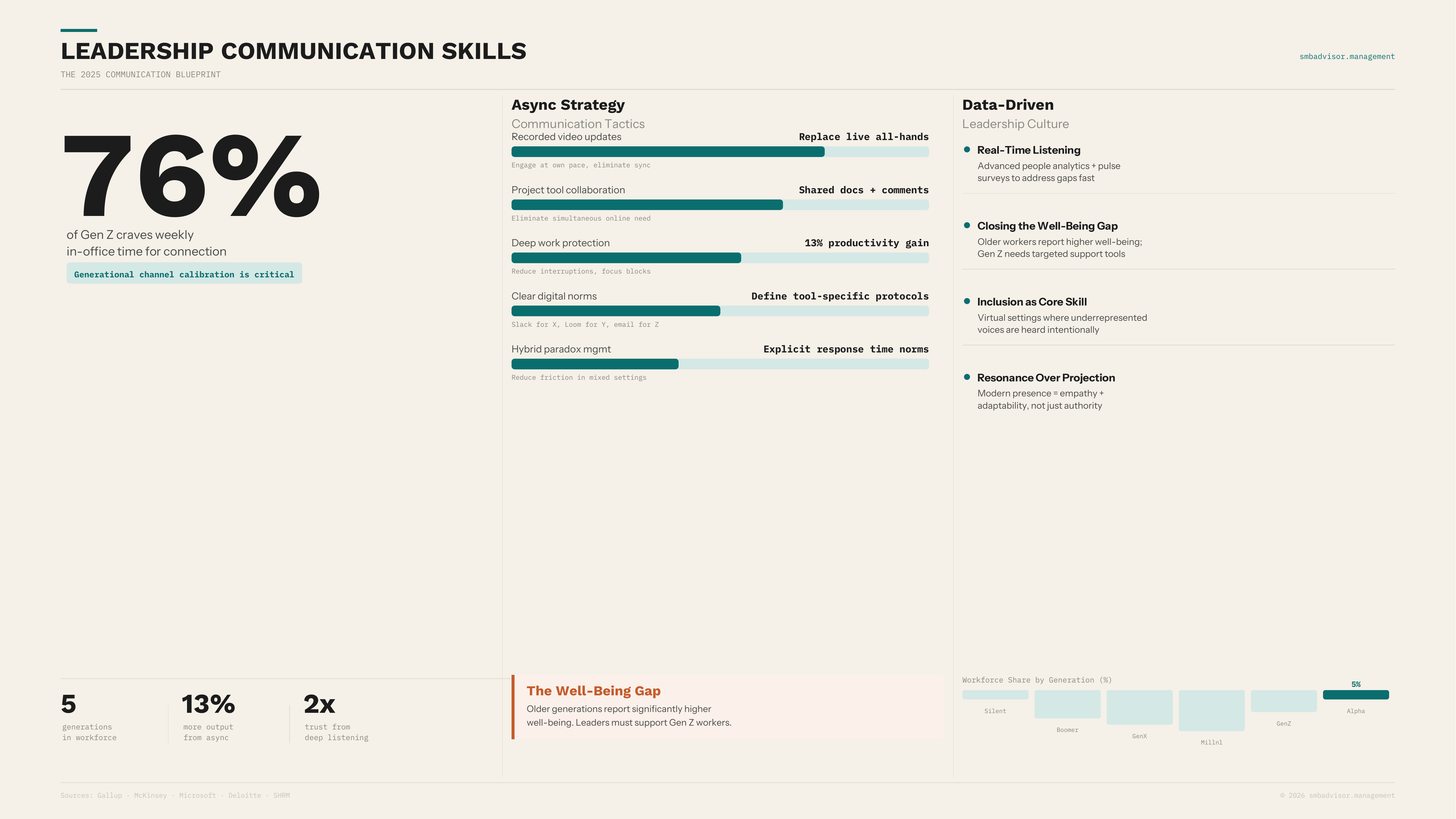
Research consistently shows that leaders who communicate with clarity, regularity, and demonstrated listening retain teams longer, make faster decisions, and operate organizations with measurably higher trust scores than leaders who communicate inconsistently or primarily through status updates. Five generations now coexist in the workforce simultaneously. Silent Generation and Boomers prefer face-to-face and phone. Gen X favors email and strategizing. Millennials are change-ready with texting and social media. Gen Z and Alpha are entrepreneurial, favoring instant messaging, video calls, and digital apps. Calibrating channel selection to audience generation is now a core leadership competency.
Asynchronous Communication Strategy
Recorded video updates replacing live all-hands meetings allow people to engage at their own pace. Research confirms remote workers using asynchronous methods can be 13% more productive by reducing interruptions and allowing deeper focus on high-concentration tasks. Establishing clear digital norms for each tool eliminates the "hybrid paradox" friction that degrades remote team performance.
The Well-Being Gap
Data shows older generations report significantly higher workplace well-being than Gen Z workers. Leaders must use listening tools to identify and support vulnerable demographics. Inclusion in virtual settings requires deliberate effort to ensure underrepresented voices are heard, not through passive availability but through intentional facilitation practices.
Sources: Gallup, McKinsey, Microsoft, Deloitte, SHRM