The Cost of Avoidance
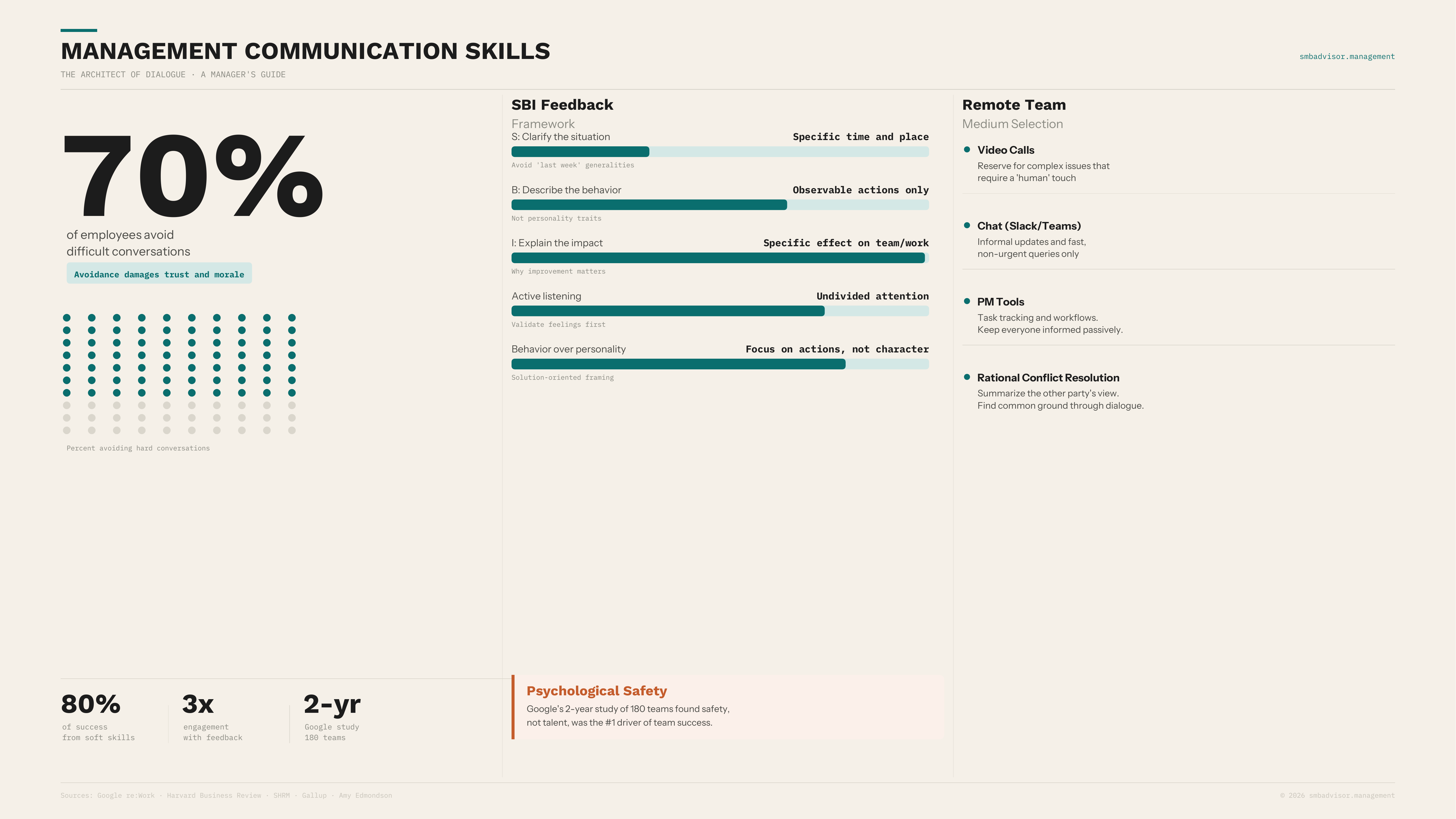
The most common and costly management communication gap is the failure to translate organizational strategy into team-level priorities , leaving direct reports executing tasks that are misaligned with what the organization actually needs to achieve. Seventy percent of employees avoid difficult conversations, creating a compounding problem where unaddressed issues escalate into systemic dysfunction. This avoidance damages trust, enables mediocre performance to persist, and allows small misunderstandings to become entrenched conflicts. Managers who build structured feedback habits see 3x higher team engagement scores.
The SBI Feedback Framework
Situation: define the specific time and place, avoiding vague references like "last week." Behavior: describe strictly observable actions, never personality traits or character judgments. Impact: articulate the specific effect on the team or work product, connecting the behavior to outcomes that matter. This three-step structure removes personal attack perceptions and keeps feedback professional and actionable.
Psychological Safety as Performance Catalyst
Google's two-year study of 180 teams found that psychological safety, not individual talent, was the primary driver of team success. Teams thrive when members feel safe to ask bold questions, share concerns, and take calculated risks without fear of judgment. Factor safety by ensuring all team members speak during conversations and by explicitly interrupting blame dynamics.
Sources: Google re:Work, Harvard Business Review, SHRM, Gallup, Amy Edmondson