The Economic Picture This Week
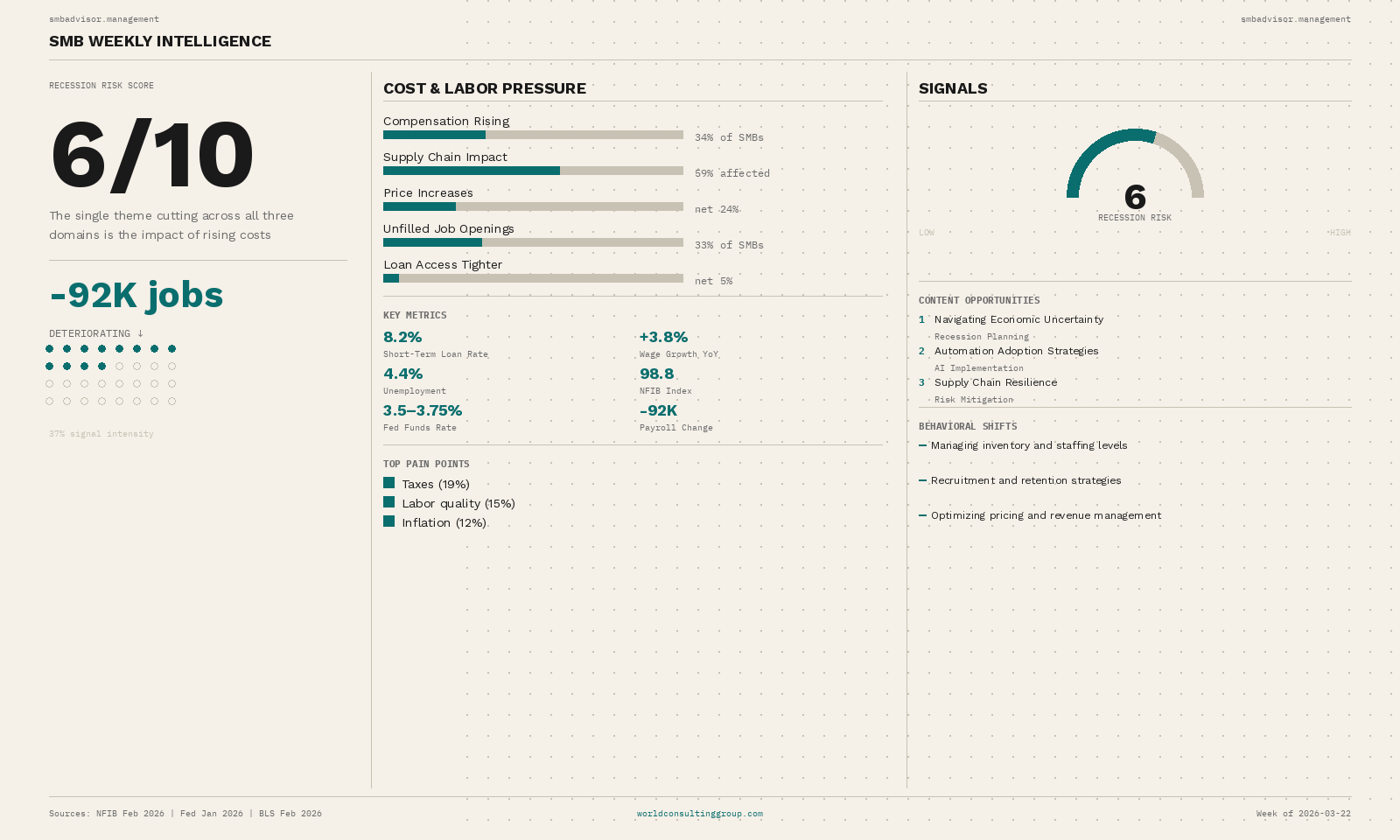
The recession risk score for U.S. small businesses is 6 out of 10 as of the week of March 22, 2026, with credit access tightening (8.2% short-term loan rate), wage growth running at 3.8% year over year, and AI adoption appetite rated high as SMBs seek automation to offset labor costs. The recession risk score for U.S. small businesses sits at 6 out of 10 as of the March 22 data pull. Credit access is tightening. Net 5% of small business owners report that loans are harder to obtain than 90 days prior, with the average short-term loan rate at 8.2%. The Federal Reserve held its benchmark rate at 3.5 to 3.75%, which keeps borrowing costs stable but does nothing to ease the pressure on businesses already operating on thin margins.
Labor cost remains the top pressure category. Wage growth is running at 3.8% year over year. Payroll data shows a net decline of 92,000 positions, which signals that SMBs are not expanding headcount. They are managing it down or holding flat. Unemployment sits at 4.4%, reflecting a labor market that is cooling but not yet soft enough to relieve wage pressure in the near term.
Technology Signals: AI Appetite Is High
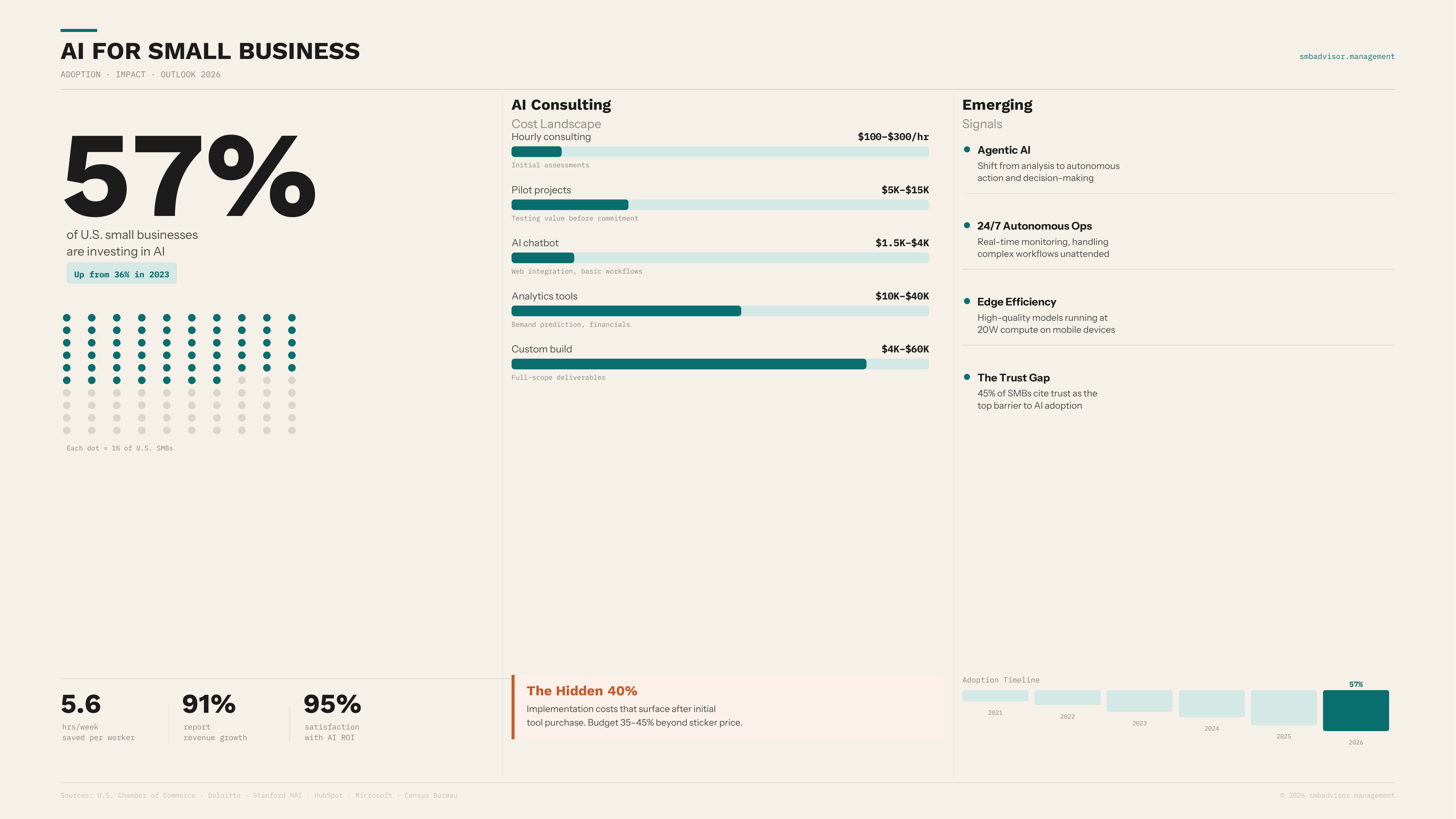
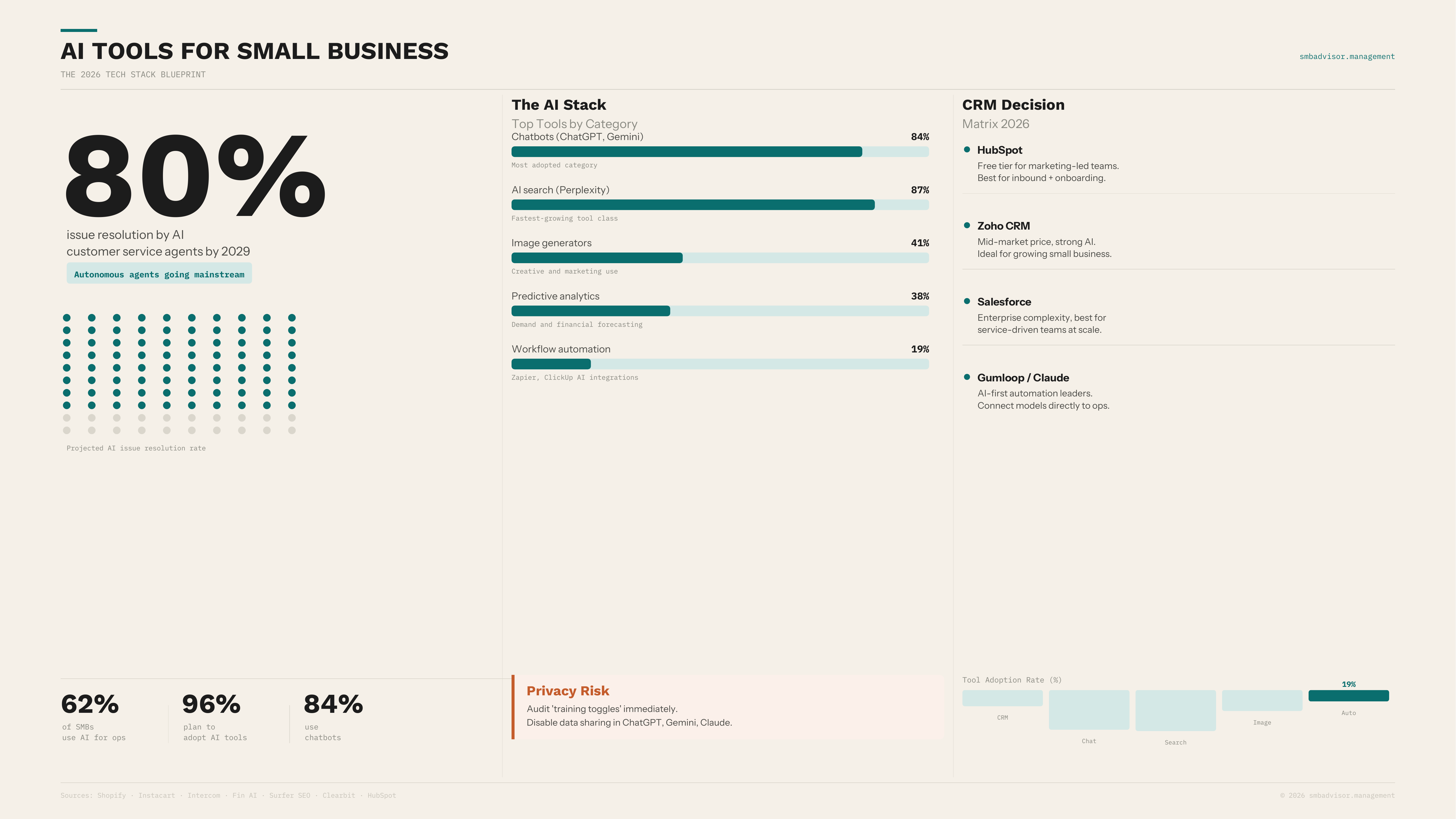
AI adoption among small businesses is in a growing state, and appetite is high. The rationale is direct: rising labor costs and supply chain disruptions are pushing owners toward automation as a margin defense strategy. The dominant tech categories being evaluated are automation tools, AI-powered operations software, and SaaS productivity platforms.
The spend pattern is balanced between cost reduction and growth. SMBs are not just using AI to cut costs. They are also investing in tools that improve productivity and competitive position. The content gap the market has not filled is practical automation adoption guidance. Not what AI can theoretically do, but what small businesses with 10 to 50 employees should actually implement first and why.
Sentiment: Deteriorating, Not Collapsing
The sentiment score is 4 out of 10, and the direction is deteriorating. The top pain points reported by owners are taxes, labor quality, and inflation, in that order. These three have appeared consistently across multiple months, which means this is not a short-term shock but a structural drag on operator confidence.
Behavioral shifts reflect how owners are responding: tightening inventory and staffing levels, intensifying recruitment and retention focus, and working harder on pricing strategy and revenue management. Forum activity shows owners actively discussing how to capitalize on sales gains that are occurring despite the macro pressure, how to protect supply chains, and how to preserve profitability as input costs climb.
What to Watch Next
Two data releases will move this picture. Updated labor market statistics, particularly any revision to payroll figures or a shift in the unemployment trend, would change the wage pressure reading and the recession risk score. The second is any new product announcements from major AI and automation vendors targeting the SMB segment. A wave of new accessible tooling could accelerate adoption timelines and shift the content gap from strategy to implementation.
Sources: NFIB Small Business Economic Trends (Feb 2026), Federal Reserve FOMC Statement (Jan 2026), Bureau of Labor Statistics (Feb 2026)