The Top Barrier Is Not Cost
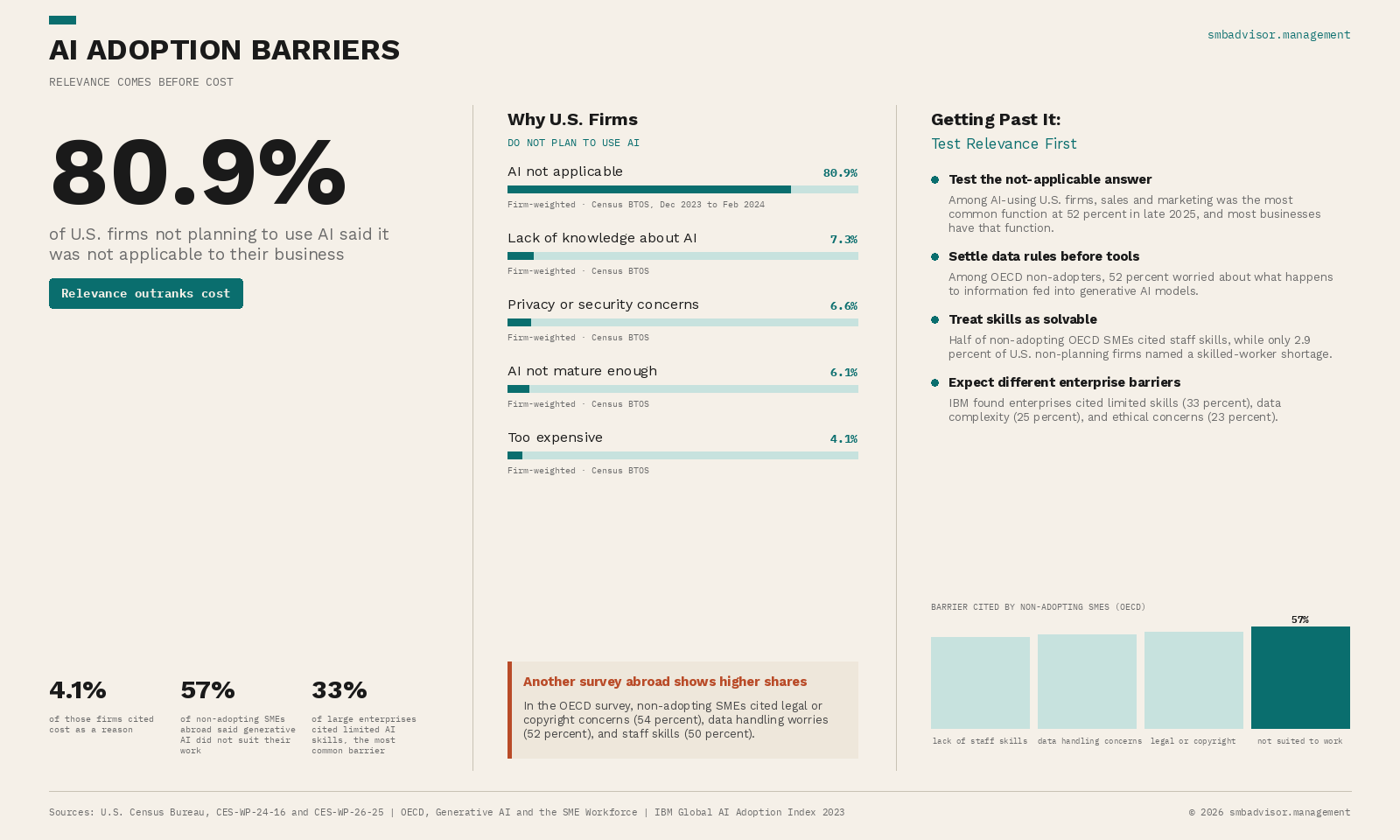
AI adoption barriers are the reasons businesses give for not using AI. Among U.S. firms not planning to use AI, 80.9% said it was not applicable to their business in Census Bureau survey data from December 2023 to February 2024. Only 4.1% said it was too expensive.
The rest of the list is short. Lack of knowledge about AI capabilities came next at 7.3%, then privacy or security concerns at 6.6% and immaturity of the technology at 6.1%. A lack of skilled workers drew just 2.9%.
Another Survey Records Different Obstacles
Other surveys show a broader set of concerns. The OECD surveyed over 5,000 SMEs in seven countries in late 2024, and the non-adopters among them cited several barriers at once. Unsuitability to their work led at 57%.
Legal or copyright concerns followed at 54%, and worries about what happens to information fed into generative AI models at 52%. Half cited a lack of skills among employees.
Large enterprises report a different mix again. IBM found enterprises exploring or deploying AI cited limited AI skills at 33%, data complexity at 25%, and ethical concerns at 23%.
Testing the Not-Applicable Answer
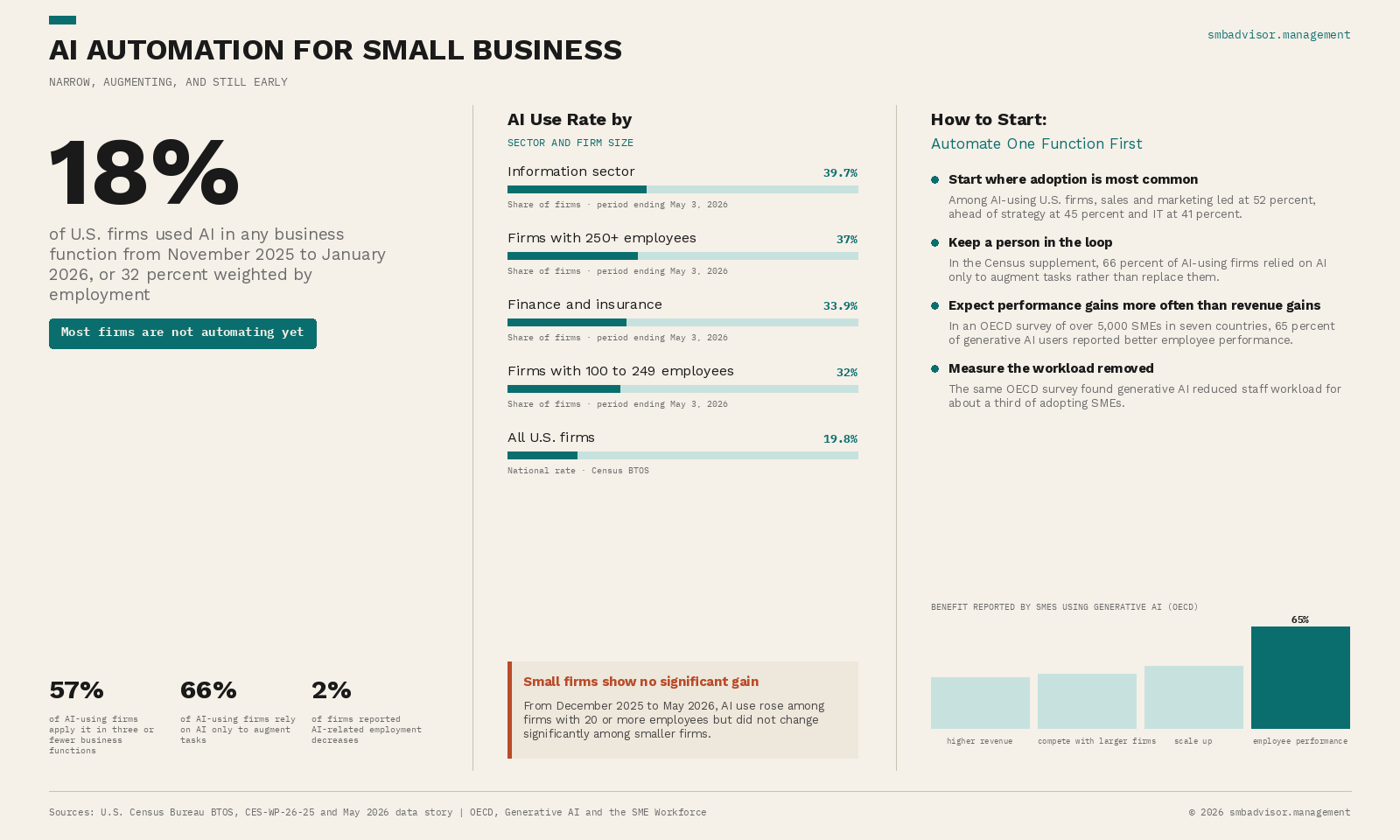
The not-applicable answer deserves a second look. Among AI-using U.S. firms, sales and marketing was the most common function at 52% in late 2025, and most businesses have a sales or marketing function. Strategy work followed at 45%.
Data rules come next. Settling which information can enter which tool removes a common concern before any purchase.
A small, supervised trial on one routine task tests relevance directly.
Skills come last, not first. Half of non-adopting OECD SMEs cited staff skills, and basic training on one approved tool is a low-cost way to support a first use case. Treat each barrier as a question to answer in order, rather than a reason to wait.
Sources: U.S. Census Bureau, CES-WP-24-16 and CES-WP-26-25, OECD, Generative AI and the SME Workforce, IBM Global AI Adoption Index 2023