The Synchronous Tax
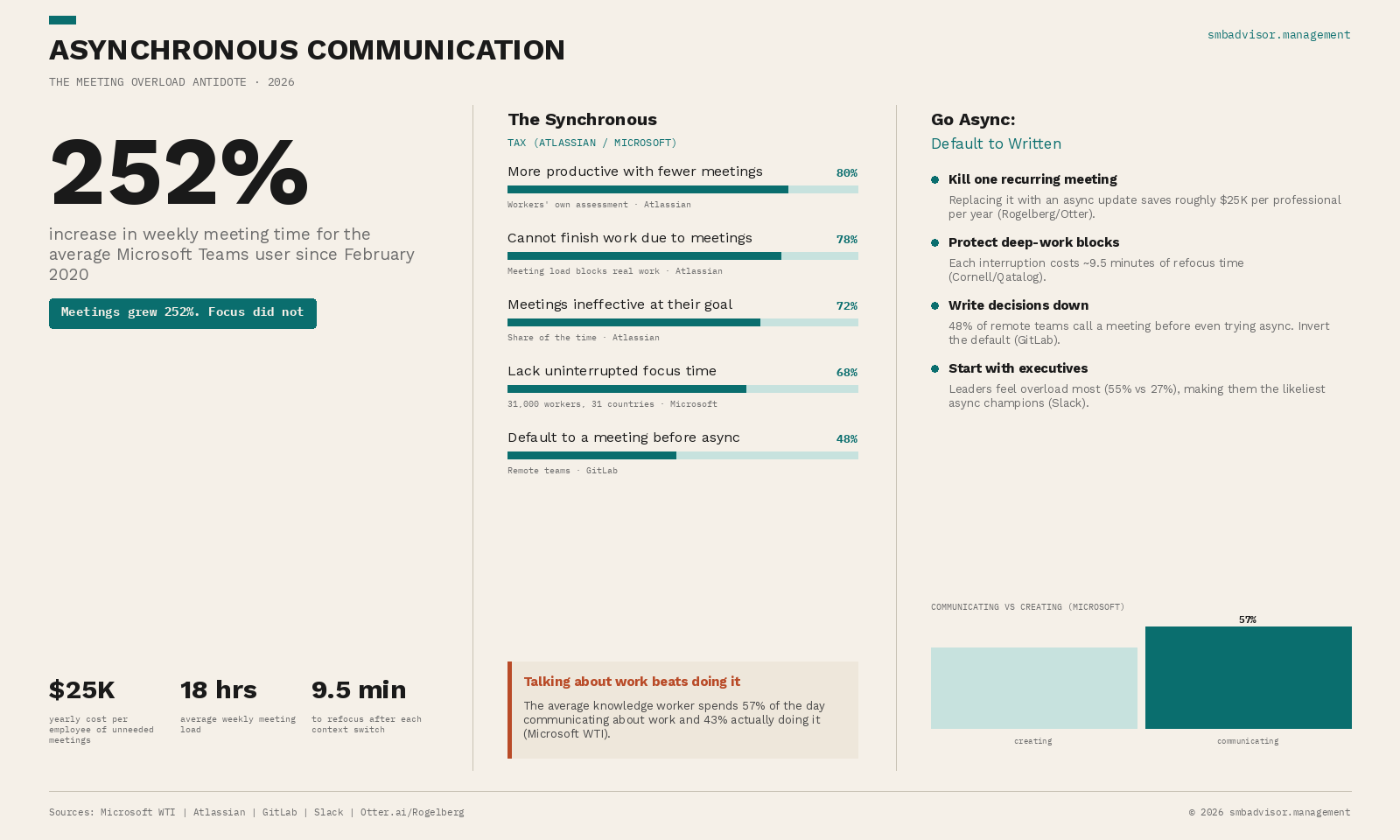
Asynchronous communication (defaulting to written updates instead of live meetings) addresses a documented overload: weekly meeting time for the average Microsoft Teams user grew 252% after February 2020, and the average knowledge worker now spends 57% of the day communicating about work versus 43% actually doing it. Atlassian's research finds meetings fail at their stated goal 72% of the time, 78% of workers say meeting load blocks their actual work, and 80% believe they would be more productive with fewer meetings.
The Price Per Seat
Meeting overload has a unit cost. Research by Steven Rogelberg (UNC Charlotte) and Otter.ai found employees average about 18 hours a week in meetings, a third of which they judge unnecessary, roughly $25,000 per professional per year in wasted salary. Add context switching: Cornell-affiliated research puts the refocus cost at 9.5 minutes per switch, and Microsoft's 2025 data shows workers interrupted every two minutes during core hours.
Going Async-First
The habit gap is the opportunity: GitLab found 48% of remote teams would call a synchronous meeting before even trying async, and 70% of organizations still default to office-centric synchronous tools. The async playbook is short: write decisions down, replace recurring status meetings with written updates, protect deep-work blocks, and start with executives, who feel meeting overload most acutely (55% versus 27% of all workers, per Slack).
Sources: Microsoft Work Trend Index, Atlassian, GitLab, Slack, Otter.ai/Rogelberg (UNC)