The Premium
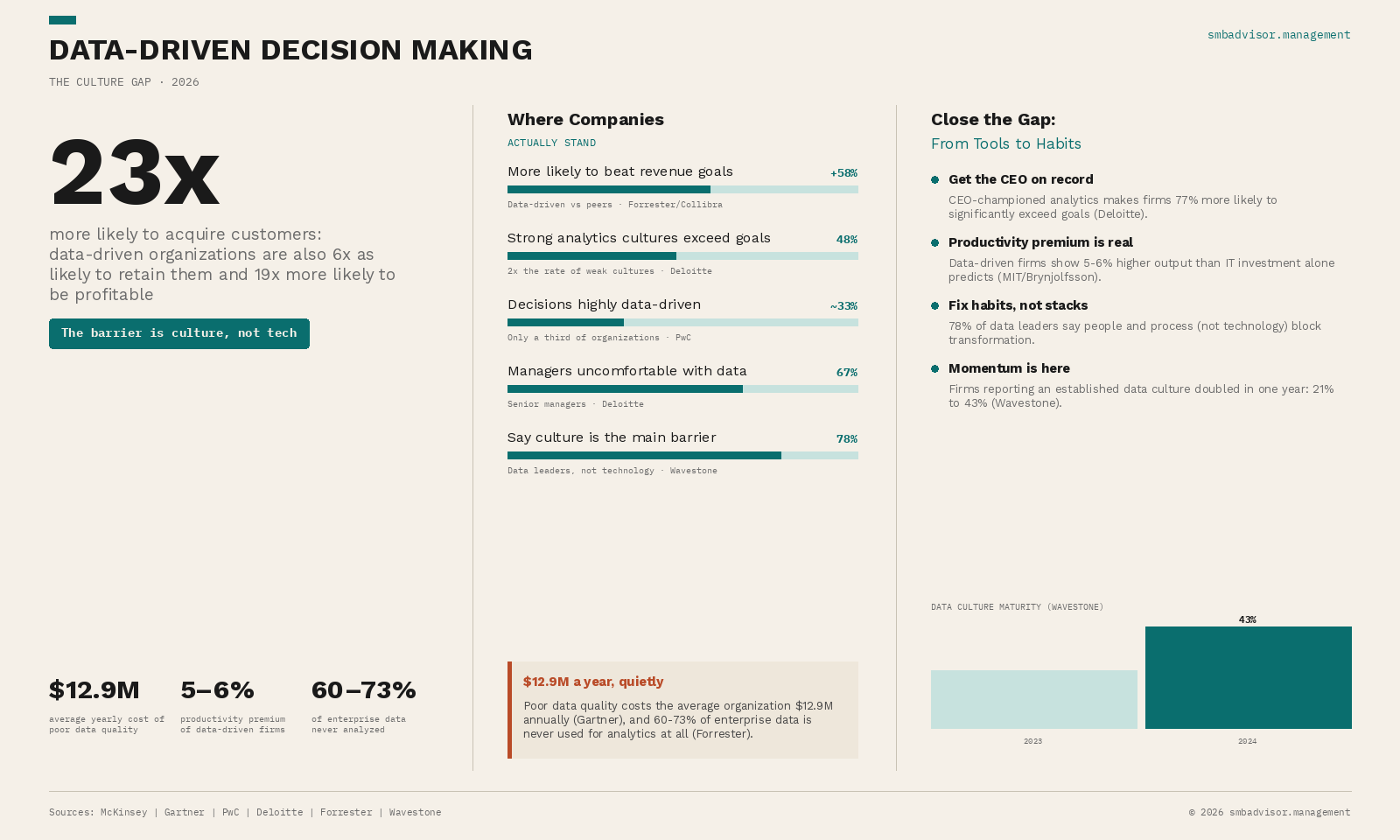
Data-driven decision making pays a measured premium: organizations that lead on it are 23 times more likely to acquire customers, 6 times as likely to retain them, and 19 times more likely to be profitable (McKinsey). The advantage holds across acquisition, retention, and profit. MIT research found firms adopting data-driven practices show 5-6% higher output and productivity than their IT investment alone would predict, and Forrester found data-driven companies are 58% more likely to beat revenue goals.
The Gap
Despite the premium, only about a third of organizations say their decisions are highly data-driven (PwC). The blockers are human: 67% of senior managers are not comfortable accessing or using data from their tools (Deloitte), 60-73% of enterprise data is never used for analytics (Forrester), and poor data quality silently costs the average organization $12.9 million a year (Gartner). Among data leaders, 78% name culture, people, and process (not technology) as the main barrier.
Closing the Culture Gap
Executive sponsorship is the strongest accelerant: companies whose CEO champions analytics are 77% more likely to significantly exceed business goals (Deloitte). The momentum is real. Organizations reporting an established data culture doubled from 21% to 43% in a single year (Wavestone), but the sequence matters: fix decision habits and data trust first, tooling second. A dashboard nobody believes is just decoration.
Sources: McKinsey, Gartner, PwC, Deloitte, Forrester, MIT (Brynjolfsson), Wavestone