The Relationship That Decides Your Engagement
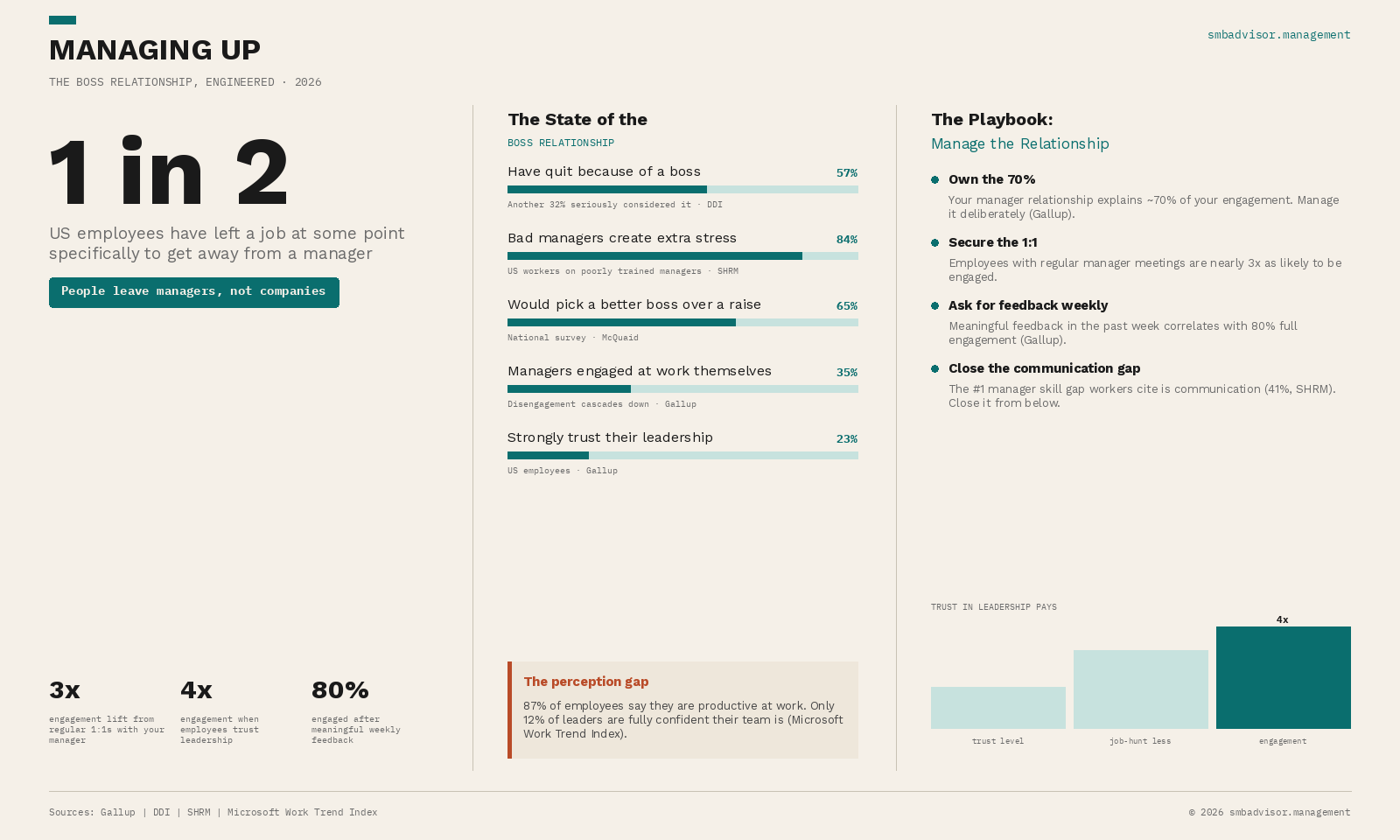
Managing up (deliberately managing the working relationship with your boss) matters because the manager relationship explains roughly 70% of the variance in employee engagement, and half of US employees have left a job specifically to escape a manager. The relationship responds to deliberate management like any other system at work. DDI found 57% have quit because of a boss and another 32% seriously considered it. The relationship is consequential enough that 65% of Americans say they would choose a better boss over a pay raise.
Why the Burden Falls on You
The uncomfortable math: only 35% of managers are themselves engaged at work, only 23% of US employees strongly trust their organization's leadership, and 84% of workers say poorly trained managers create unnecessary work and stress (SHRM). Add Microsoft's productivity-paranoia gap: 87% of employees say they are productive while only 12% of leaders are fully confident of it, and waiting for the relationship to manage itself is a losing strategy.
The Upward-Management Playbook
Three moves have measured payoffs. Secure a regular 1:1. Employees who get one are nearly three times as likely to be engaged (Gallup). Ask for feedback weekly rather than annually: meaningful feedback in the past week correlates with 80% full engagement. And communicate proactively in your manager's preferred format: the #1 manager skill gap workers cite is communication (41%, SHRM), which means clear upward communication is the scarcest resource you can supply.
Sources: Gallup, DDI, SHRM, Microsoft Work Trend Index