Judgment Is a Depletable Resource
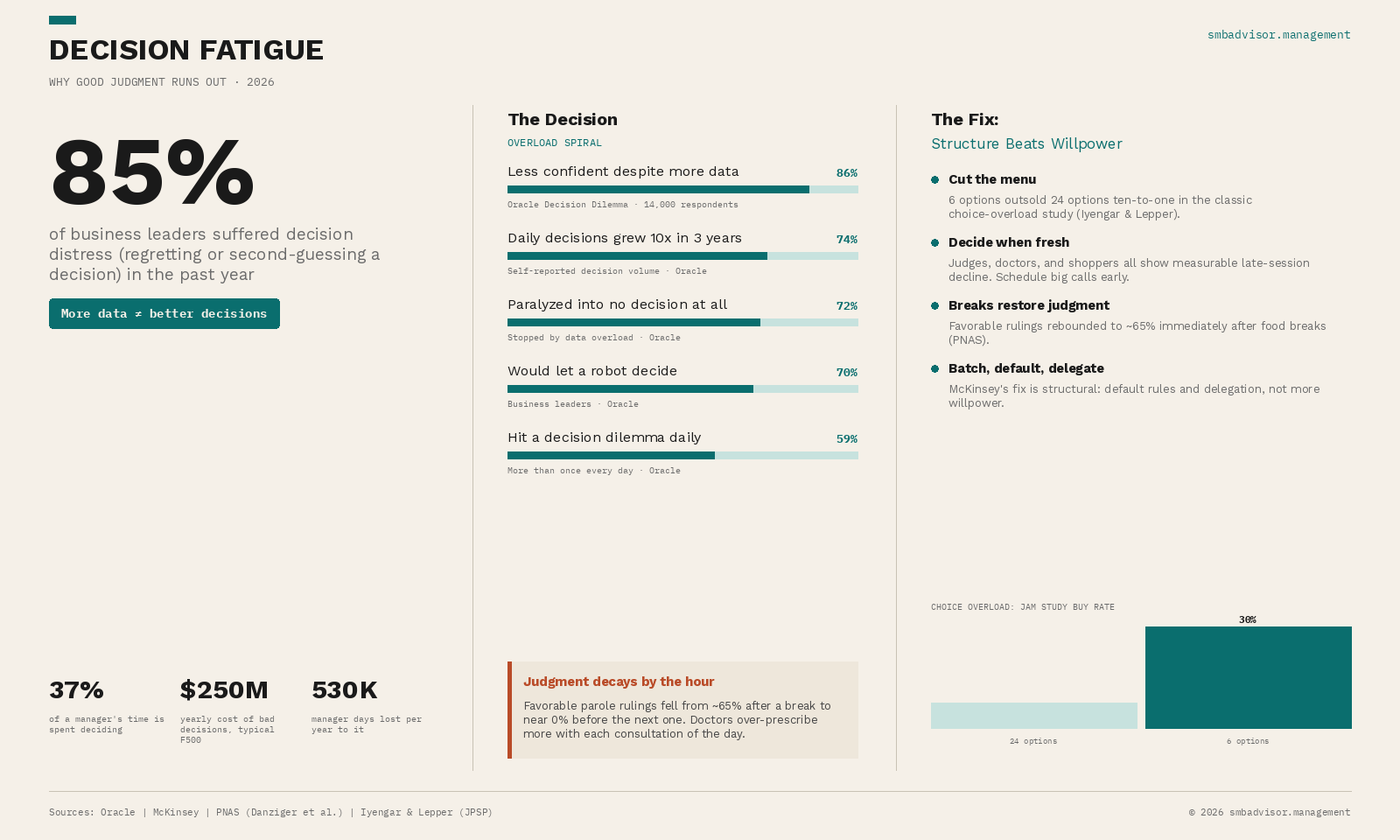
Decision fatigue is the measurable decline in decision quality after a long session of decision making, and it now affects most business leaders, with 85% reporting decision distress in the past year and 74% saying their daily decision count has grown tenfold in three years. The landmark evidence comes from a study of 1,112 parole rulings: judges granted parole about 65% of the time right after a break, falling toward zero before the next one.
The Data Paradox
Oracle's 14,000-person study found more information is making decisions harder, not easier. 86% of leaders feel less confident in decisions despite having more data, 72% admit data overload has stopped them from making a decision at all, and 70% would prefer a robot decide for them. McKinsey puts the cost in time: managers spend 37% of their time on decisions, and 61% say at least half of it is used ineffectively, roughly $250 million a year in wasted labor at a typical Fortune 500 company.
Structure Beats Willpower
The fixes are structural, not motivational. Cut the menu: in the classic choice-overload study, a display with 6 options outsold one with 24 by ten to one. Schedule consequential decisions early, when judgment is fresh. Take real breaks: parole approvals rebounded to ~65% immediately after food breaks. And batch the trivial: default rules and delegation reserve cognitive budget for the decisions that matter.
Sources: PNAS (Danziger et al.), Oracle, McKinsey, Iyengar & Lepper (JPSP)