The Most Common Management Failure
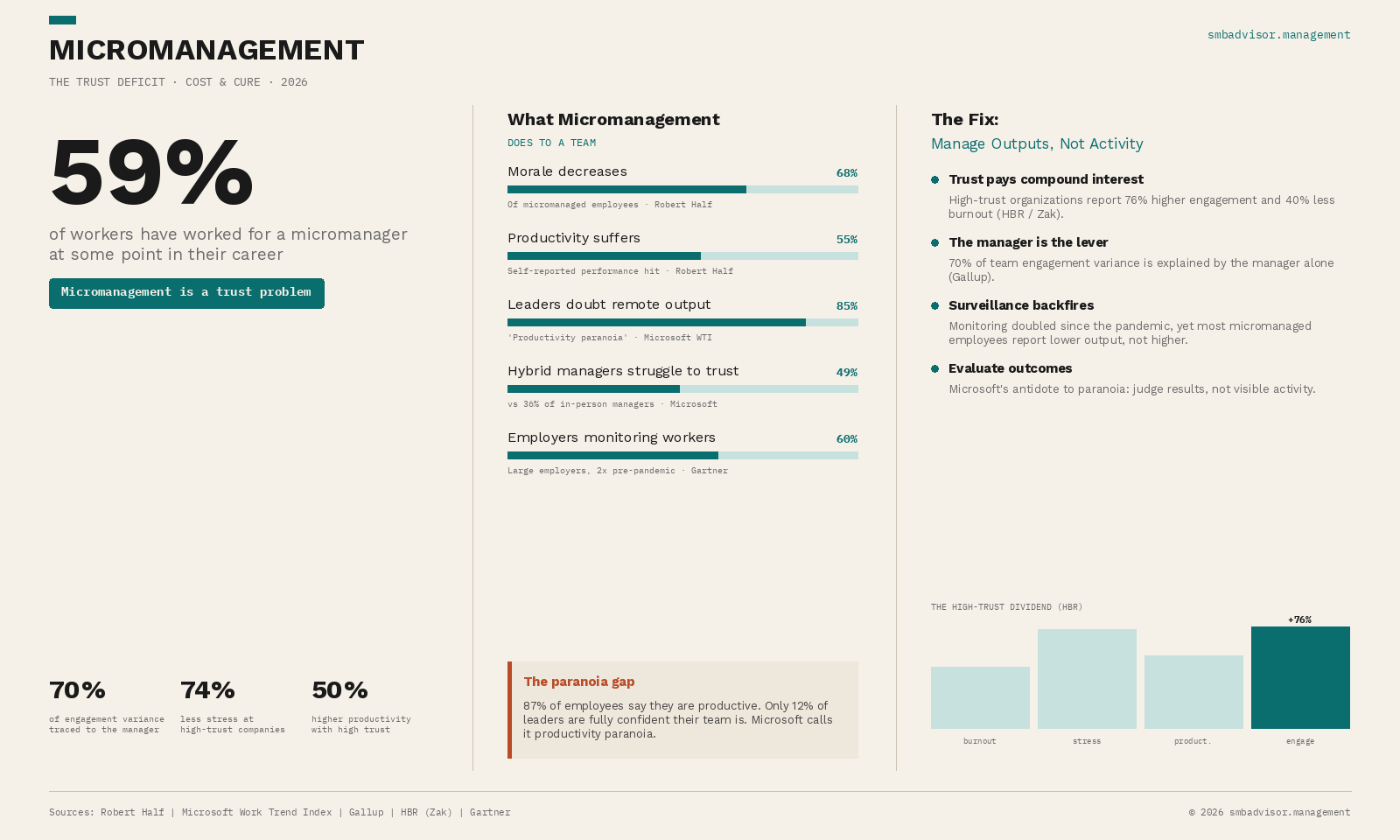
Micromanagement is the most widely experienced management failure in the workplace: 59% of workers report having worked for a micromanager, and of those, 68% say it decreased their morale while 55% say it hurt their productivity. The data identifies it as a trust failure with measurable performance costs. The behavior achieves the opposite of its goal. Managers monitor more closely to raise output, and output measurably falls. Robert Half's survey data shows the damage lands first on morale, then on performance, then on retention.
Productivity Paranoia
Hybrid work widened the trust gap that fuels micromanagement. Microsoft's Work Trend Index found 85% of leaders say hybrid work makes it hard to be confident employees are productive, while 87% of employees report being productive. Microsoft calls this "productivity paranoia." The response has been surveillance: Gartner found 60% of large employers now use monitoring tools, double the pre-pandemic share.
The High-Trust Alternative
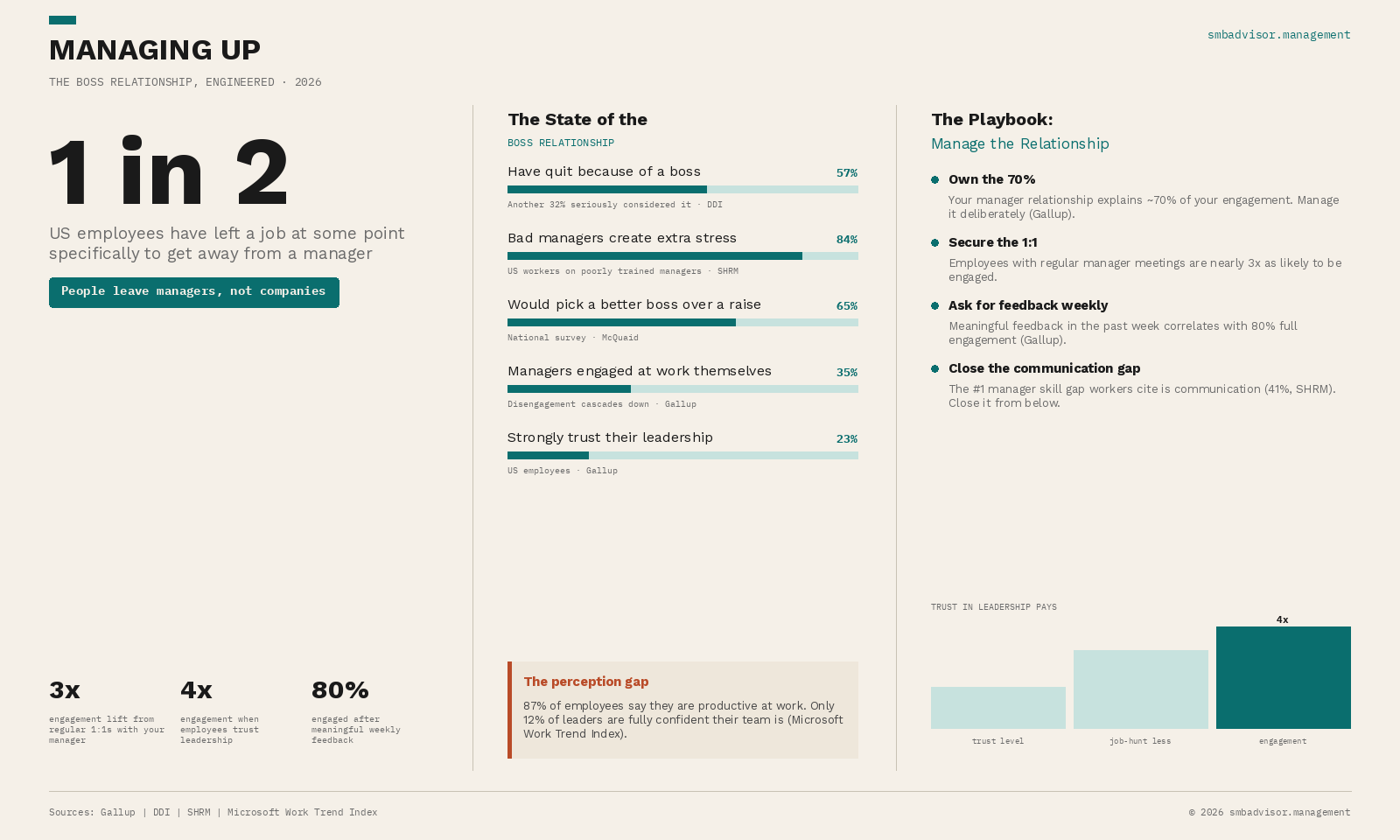
The business case against micromanagement is a business case for trust. Research published in Harvard Business Review found employees at high-trust organizations report 74% less stress, 50% higher productivity, 76% more engagement, and 40% less burnout. And because Gallup attributes 70% of team engagement variance to the manager alone, the fix is specific: evaluate outputs instead of activity, and replace check-ins about presence with conversations about obstacles.
Sources: Robert Half, Microsoft Work Trend Index, Gallup, Harvard Business Review, Gartner