Retention Is Cheaper Than Replacement
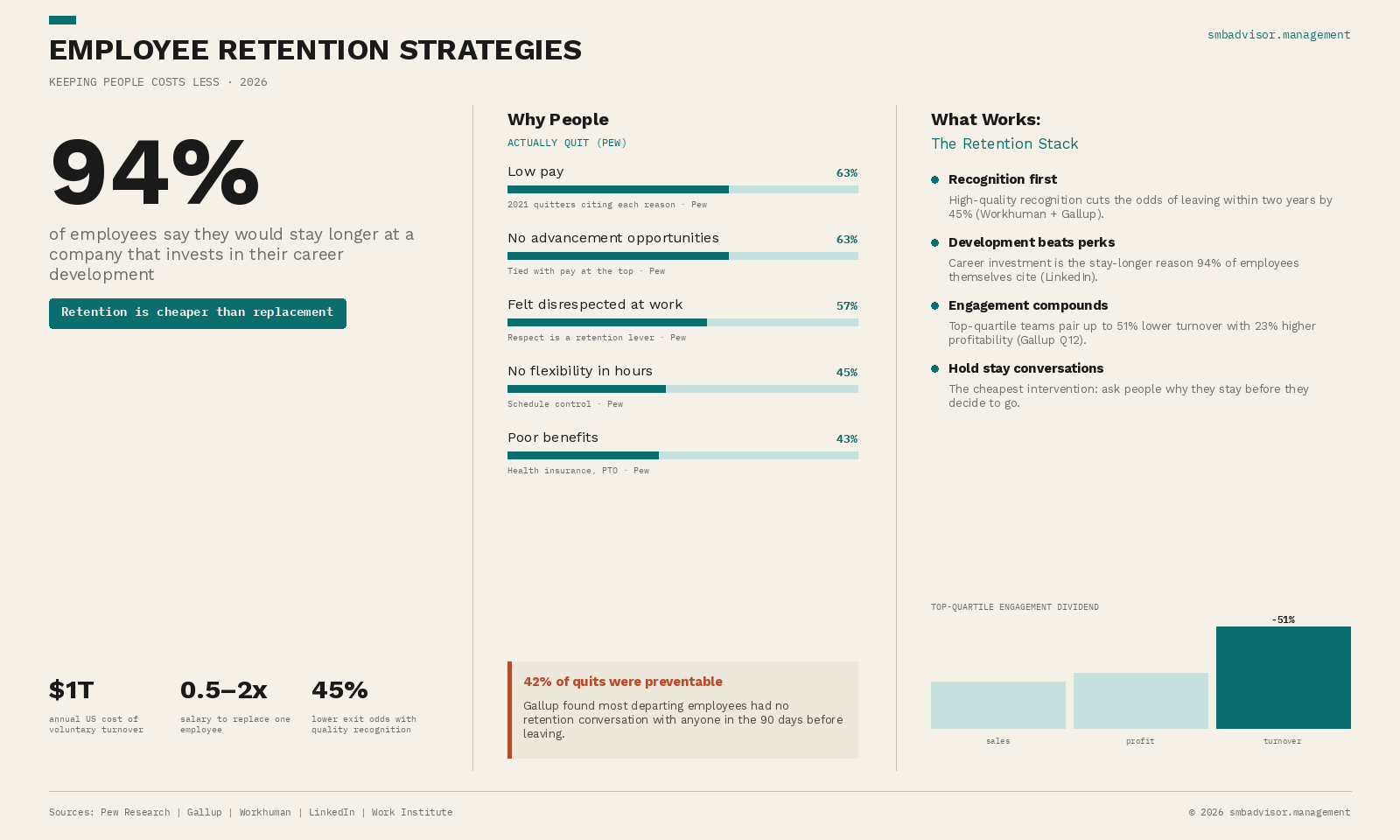
The most effective employee retention strategies are career development, high-quality recognition, and regular manager conversations, and they cost a fraction of replacement, which runs one-half to two times an employee's annual salary. Each lever carries a measured effect size in longitudinal workplace research. Gallup estimates voluntary turnover costs US businesses $1 trillion a year, and the Work Institute puts 2023's replacement spending near $900 billion. The striking part: 42% of employees who quit say their manager or organization could have prevented it.
Why People Actually Quit
Pew Research's survey of people who quit found the top reasons were low pay (63%), no opportunities for advancement (63%), and feeling disrespected at work (57%), followed by inflexible hours (45%) and poor benefits (43%). Advancement ties with pay at the top, which is why development is the highest-impact non-compensation lever: 94% of employees told LinkedIn they would stay longer at a company that invests in their careers.
The Measured Levers
Three interventions have measured effect sizes. Recognition: employees receiving high-quality recognition are 45% less likely to leave within two years (Workhuman + Gallup, 3,447 careers tracked). Engagement: top-quartile teams show up to 51% lower turnover alongside 23% higher profitability (Gallup Q12 meta-analysis). And the stay conversation: most preventable exits involved no retention conversation in the final 90 days. Asking people why they stay, before they decide to go, is the cheapest strategy on the list.
Sources: Pew Research Center, Gallup, Workhuman, LinkedIn, Work Institute