The Ranking Fell, the Exposure Did Not
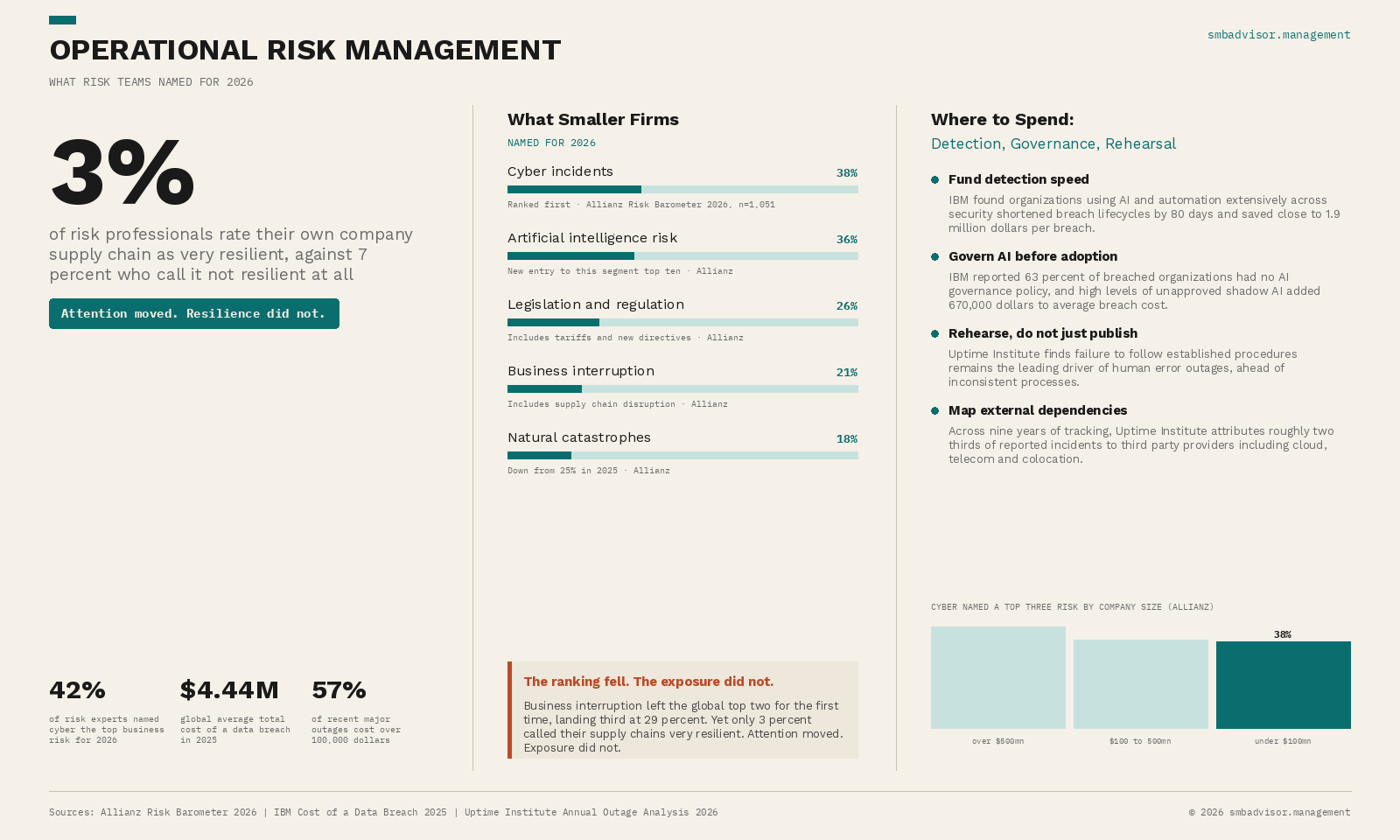
Operational risk management is the discipline of identifying and reducing loss arising from failed processes, people, systems or external events. The 2026 Allianz Risk Barometer, drawing on 3,338 responses across 97 countries, found business interruption dropped out of the global top two for the first time in the survey history, landing third at 29%. That drop reflects attention moving to cyber and artificial intelligence, not any measured improvement in continuity. In the same survey only 3% of respondents described their own supply chains as very resilient, and 7% called them not resilient at all.
What Smaller Firms Named
Among the 1,051 respondents at companies below 100 million dollars in annual revenue, cyber incidents ranked first at 38%, followed by artificial intelligence risk at 36%, a new entry to that segment's top ten. Legislation and regulation followed at 26%, business interruption at 21%, and natural catastrophes at 18%, down from 25% the prior year. The gap between smaller firms at 38% and larger firms at 46% on cyber is narrower than the resource gap between them, so smaller operators recognize the exposure without having the budget to answer it.
Where Spending Actually Works
IBM found organizations using AI and automation extensively across security functions shortened breach lifecycles by 80 days and saved close to 1.9 million dollars per breach, against a global average total breach cost of 4.44 million dollars. Governance is the cheaper lever: 63% of breached organizations had no AI governance policy, and high levels of unapproved shadow AI added 670,000 dollars to average breach cost. The Uptime Institute attributes roughly two thirds of reported incidents to third party providers including cloud, telecom and colocation, which makes dependency mapping a first order control.
Sources: Allianz Risk Barometer 2026, IBM Cost of a Data Breach 2025, Uptime Institute Annual Outage Analysis 2026