Most Organizations Have No Written Plan
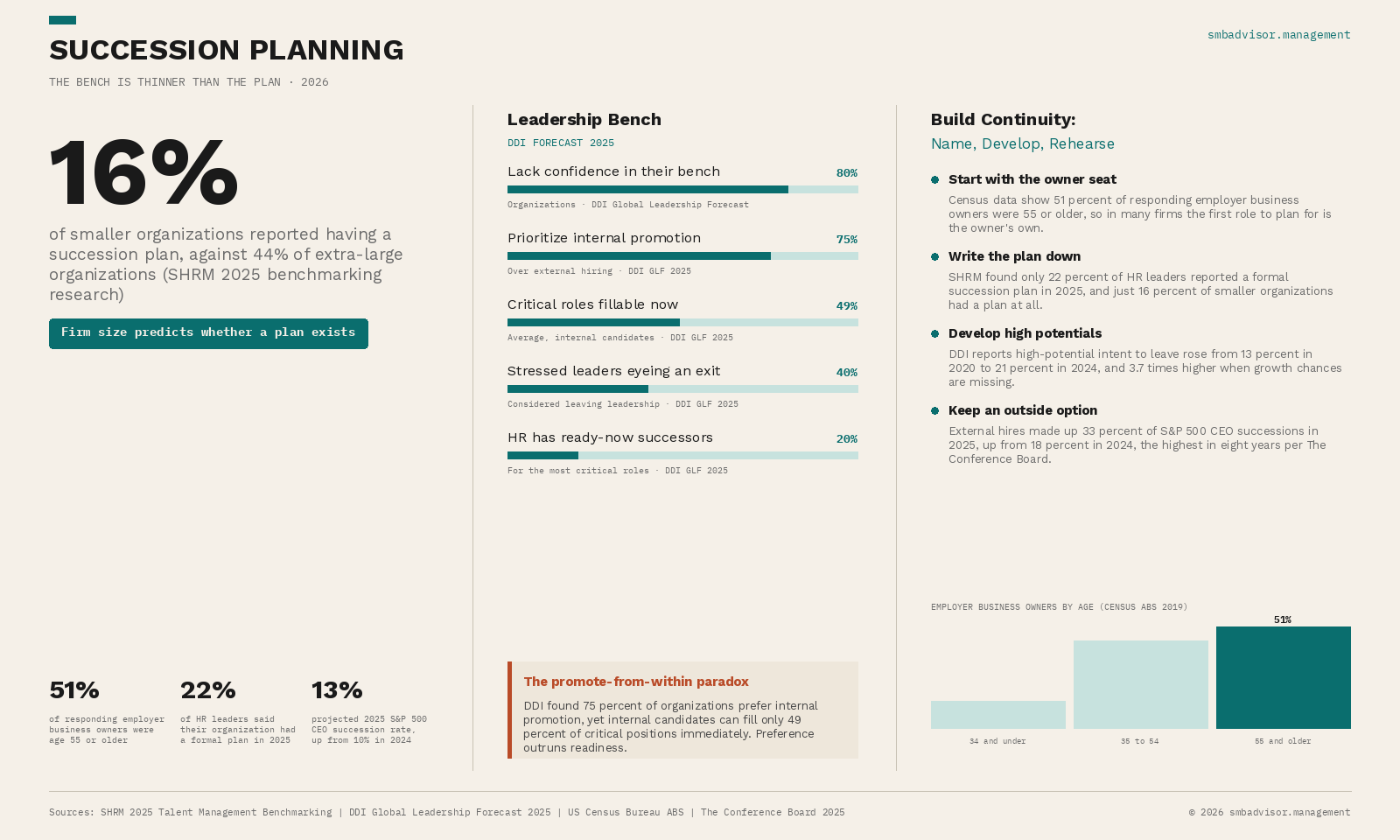
Succession planning is the practice of naming and developing people who can step into critical roles before those roles fall vacant. SHRM benchmarking research found only 22% of HR leaders reported a formal succession plan in 2025. Just 16% of smaller organizations had a plan, against 44% of extra-large ones.
Size predicts preparation. The firms with the least slack are the least likely to hold a written plan.
The Bench Is Thin Even Where Plans Exist
DDI's Global Leadership Forecast 2025 surveyed 2,185 HR professionals and 10,796 leaders across more than 50 countries. Only 20% of HR leaders said they had leaders ready to fill their most critical roles. DDI also found that 75% of organizations prioritize internal promotion, yet internal candidates can fill only 49% of critical positions immediately.
High-potential intent to leave rose from 13% in 2020 to 21% in 2024. These respondents skew toward larger organizations, so the smaller-firm gap is likely wider.
The Owner Seat Comes First
For many small firms, the most critical role is the owner. Census Annual Business Survey data show 51% of responding employer business owners were 55 or older, and only 6% were 34 or younger. Large companies face turnover too.
The Conference Board projected a 13% S&P 500 CEO succession rate for 2025, and external hires rose to 33% of those successions. A written plan should name an internal candidate and an outside route.
Sources: SHRM 2025 Talent Management Executives Benchmarking, DDI Global Leadership Forecast 2025, US Census Bureau Annual Business Survey 2019, The Conference Board CEO Succession Practices 2025